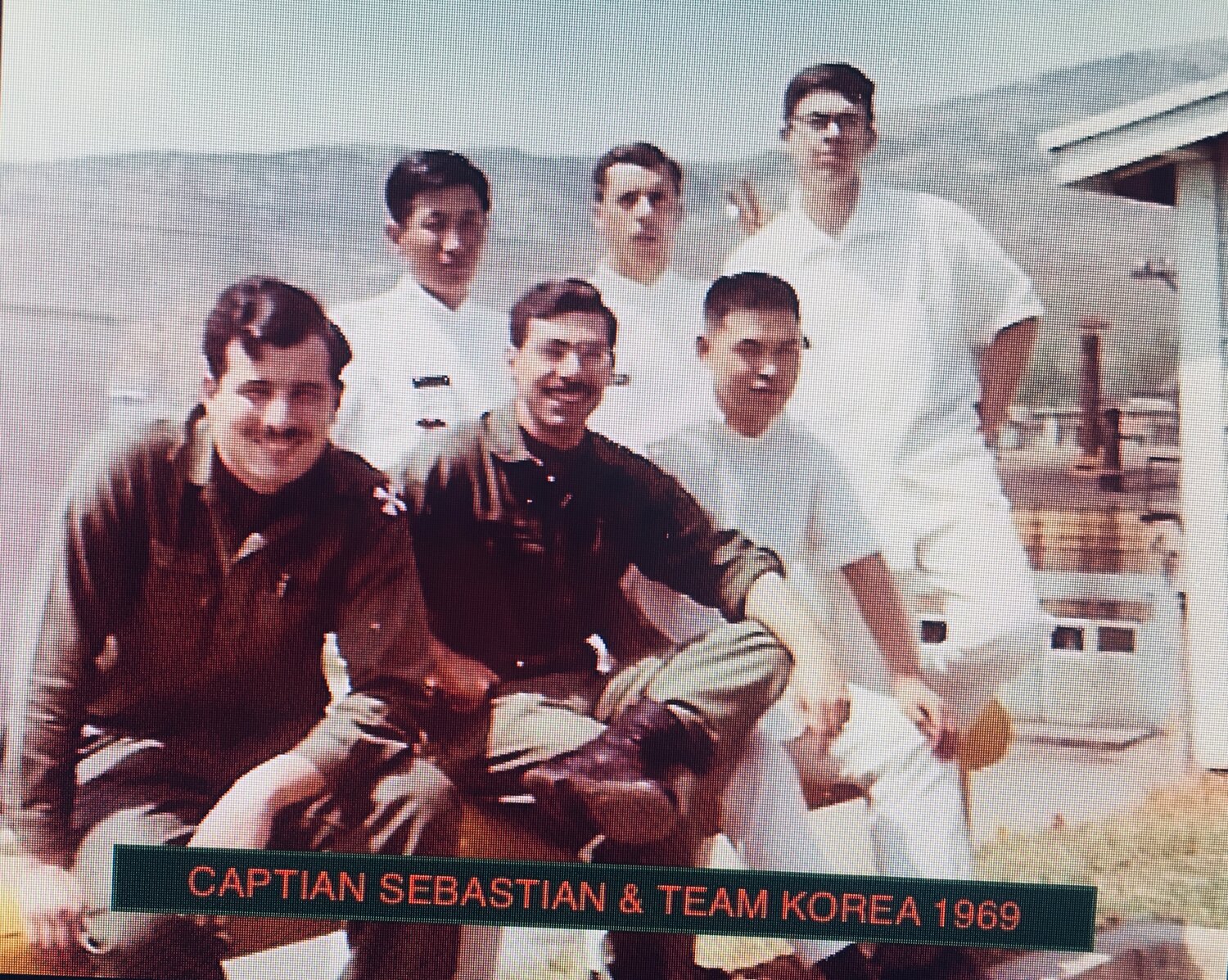
Editor’s note: Capt. Richard Sebastian, DDS, retired, served in the U.S. Army in Korea 1969-1970. The SUN is honored Sebastian chose to share his story with our readers and to help us continue our tradition of highlighting those who have served — and continue to serve— our country.
I am a retired dentist and a veteran who served in Korea during the Vietnam War.
My love and affection for my country harkens in great part to the way it treats the men and women who serve in its armed forces.
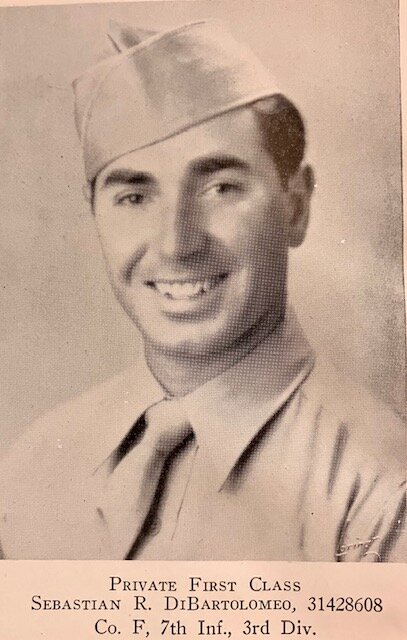
My father, PFC Sebastian R. DiBartolomeo, was killed in combat while fighting the Germans in World War II. I was 2 years old at the time of his death and was his only child.
The Veterans Administration has a special designation for orphan sons who have no male siblings. We are called “sole surviving sons.” I am one of those.
As compensation for the loss of their fathers, sole surviving sons are accorded certain rights and privileges. They are exempt from being drafted into the armed services, and they are also eligible to receive educational benefits through the Veterans Administration (VA).
My dental career began in my junior year of high school when the VA sent an advisor to my school for the purpose of administering aptitude tests to help me in determining what career I would be most successful pursuing.
The top two results of that test were orthopedic surgeon or dentist. When I asked which one of these medical professionals would be getting calls in the middle of the night, the examiner said, “I suppose it would be the orthopedic surgeon.” My reply was, “Well, I want to be the other one.” From that time on, when anybody asked what I was going to do, I always answered, “I’m going to be a dentist.”
Another perk of being a sole surviving son was that the VA, having chosen my career, allotted me $110 a month for the eight years it took to get my DDS degree. It was a lot of money back in those days and without it I probably wouldn’t even have graduated from college. I was good with my hands in dental school, so working on patients was a breeze for me.
Medical and dental schools are sorely lacking in teaching students how to run the business aspect of their professions. I was determined that I was not only going to be a great dentist, I would also run a successful business. I took every course and every elective I could find that dealt with business management.
In honor of my father and in order to pay back the debt I felt I owed to my country.
For making my career possible, I volunteered for service in the Army Dental Corps the week before graduating. As is often the case, the recruiters’ promise of getting a choice duty station was a myth. I had been married a little over a month to my beautiful young wife when the Army decided to send me to Korea, where wives of servicemen were not authorized.
After three weeks of basic training, I arrived at Camp Carroll, in central Korea, Sept. 2, 1969. Camp Carroll was a repair depot. Its main purpose was for rebuilding salvageable tanks and armored personnel carriers from the Vietnam battlefields.
The 665th dental detachment consisted of two dentists, one sergeant (who was also the office manager/dental assistant) and a Korean army dental hygienist.
Two dentists sharing an overworked dental assistant was a terribly inefficient use of resources. When I arrived, one of the dentists had already left for home, and the other only had a month left in the service. So, soon enough, I was on my own. It was a heavy load for one dentist and a single helper to handle. Every time I called my commanding officer, asking where the second dentist was, he would say, “We’re working on it”.
This went on for several weeks, and then I got the first phone call.
Serendipity
Headquarters company had a 19-year-old trooper who claimed to be a conscientious objector. He was refusing to work any job which could possibly involve killing other people.
Even though Private Zimmerman may have been morally correct, refusing to work is still a court-martial offense and would eventually result in a dishonorable discharge.
However, Zimmerman said working in a medical facility would be in harmony with his beliefs.
The company commander called and asked if I could possibly use him in my clinic. When the commander explained to me the lifelong consequences of a dishonorable discharge, I said, “Send him over.”
I interviewed Zimmerman and he seemed to be an intelligent, conscientious young man.
Here was the opportunity I had trained for. A dentist working with a trained assistant can work twice as fast as he could working alone. Zimmerman became my receptionist/scheduler, which allowed more time for Sgt. Hall to work chairside with me. There was a noticeable increase in our daily production output.
About three weeks later, I got another call from company headquarters. They had another conscientious objector with the same beliefs that Zimmerman had expressed. I interviewed Private Collins and immediately accepted him as the fifth member of my team.
As soon as he was reassigned to me, he became my take down, set up and sterilizer person. We now had a five-man clinic, and we began seeing a lot more patients each day. We were a good team. We liked each other, and we had a lot of fun. At this point, I gave up and stopped asking my CO for that second dentist.
As mentioned earlier, wives were not authorized in Korea, but a soldier could bring his wife over at his own expense. They would have to live on the economy and not on a base.
I was deeply in love with my young wife, and after pulling all the strings I finally managed to get her to Korea in January, six months after I had been in the country. I had remodeled an unused little red school house located at a German monastery about 2 miles from the base. (Where I got the furnishings, especially the toilet and the space heater is a whole other story). It was a joyous reunion.
Another soldier had brought his wife over a little before me. They were living in a hooch in the village near the base. She was 19 years old and a trained dental assistant. Her name was Elaine; she and my wife were the only two blonde Caucasians in that part of Korea. One day in February, she dropped by the clinic. She told me she was bored to tears and had little to do to keep her occupied. She asked if she could come and work with me and my team. Of course, we couldn’t pay her, but that didn’t matter. So, Elaine became the sixth member of my team.
All of a sudden, when the word got out that there was a cute blonde, blue-eyed girl working in the dental clinic, our morning sick call doubled. Needless to say, Elaine became my favorite assistant. Much to my delight, we began to really crank out dental procedures.
Once a year, in July, the Army inspector general did a thorough review of all of the dental clinics in Korea. The inspector, after reviewing our records, issued me a commendation citation with their highest rating, that being “superior.” Apparently, my clinic was producing more dentistry than most of the two-man dental clinics in Korea at that time.
At this point, my commanding officer finally made a decision. There would not be a second dentist sent to Camp Carroll. I was on my own for the rest of my tour. We enjoyed working together and our success story more than compensated for not having that second “drill captain.”
As far as payback to the U.S. government for helping to pay for my education, I estimate that I saved the United States approximately $24,000, which would have been the salary of a second dentist. That was about triple what the government had invested in my career. So, in tribute to my father’s legacy and in gratitude to a grateful nation, payback with interest.
And the legacy continues.
Veterans
I am now well into my eighth decade and living a very active retirement. The VA takes care of my health care needs, relieving me from the financial burden of increasingly more expensive health care insurance.
I spend four months each year in Pagosa Springs, where I have become an active member of a veterans group there called Veterans for Veterans of Archuleta County. In my opinion, this grassroots organization is one of the finest veterans’ organizations in the country.
It was founded in 2011 by six veterans who were concerned about the alarming number of veteran suicides in Archuleta County. At that time, local veterans had little or no access to health care or mental health counseling. The founders formed a 501(c)(3) nonprofit with just $24 in the bank and one simple mission: to help and support fellow veterans.
It wasn’t long before the group successfully persuaded the Albuquerque VA district to begin providing health care, mental health services and counseling in Pagosa Springs. As these services became available, veteran suicide rates began to decline.
From this humble beginning, the Vets For Vets has grown to more than 250 members. Last year it raised more than $120,000 through fundraising events such as a golf tournament, concessions at community events and getting grants from government organizations.
This small group of dedicated ex-service people also provided more than 10,000 volunteer hours doing community service. There are no paid employees, and over 90 percent of the money raised goes directly to local veterans and their families.
My job with the Vets for Vets for the last two years has been to contact local businesses to see if they would be willing to give vets a discount. It has been a most rewarding experience. Because the Vets for Vets are so active in the community, local businesses are more than happy to recognize and support them. At the end of last summer, 64 local merchants had agreed to the discount program. That acceptance rate was over 95 percent.
Have the Vets made a difference? The answer is a resounding yes. In the 12 years since the organization became fully operational, there have been only three veteran suicides in Archuleta County. That represents a suicide rate approximately 96 percent lower than the national rate for veterans.
I feel privileged to be a member of such an extraordinary group of men and women whose commitment to serving both veterans and the community continues to make a lasting difference.
I am proud of my service in the military and, as far as payback goes, I got back much more than I ever gave.
We all served, but only those men and women who were in actual combat can know the real cost of their service. We all owe them so much.
When you see someone wearing the hat that says, “veteran,” thank them for their service. It makes all the difference in the world.


 >