|
The Colorado Department of Transportation (CDOT) opened U.S. 160 between Pagosa Springs and South Fork to travel in both directions on Tuesday, Oct. 27, at 3:30 p.m. Although the highway has been cleared for travel, motorists should be prepared for 24/7 delays and single lane alternating traffic at multiple locations along the route where damaged segments of roadway are being repaired. Crews will work swiftly to rehabilitate and stabilize the travel lanes before winter conditions set in.
CDOT warns travelers to plan ahead and allow for up to an hour of additional travel time to reach destinations beyond U.S. 160 Wolf Creek Pass. Motorists are urged to slow down and use caution through work zones with narrow and reduced travel lanes. Keep your full attention on the roadway for your safety and the safety of workers operating close to live traffic.
All operations are weather-dependent and subject to schedule adjustments. Real-time road conditions, traffic updates and construction impacts are available on COtrip.org or on the COtrip Planner app.
Travel impacts
- Pagosa Springs to Treasure Falls (Mile Point 150): Work to permanently repair a damaged culvert and sinkhole in the southbound lanes is underway approximately 6 miles east of Pagosa Springs. Motorists will be guided by temporary traffic signals and signage. Plan for 24/7 single-lane alternating traffic, full stops and up to 20 minute delays. This segment of highway was opened to local traffic just before 5 p.m. on Monday evening.
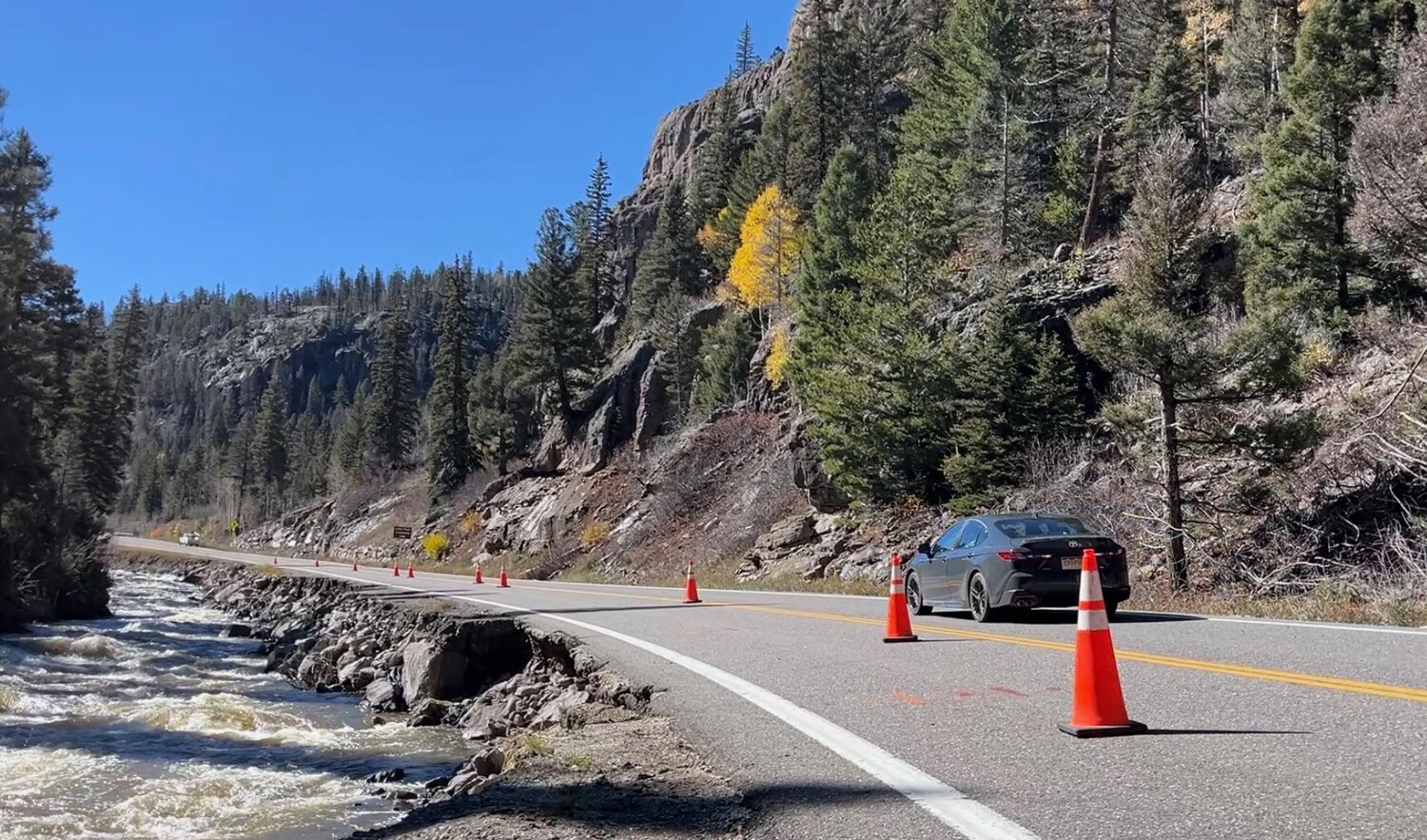
- Wolf Creek Summit to South Fork (MP 176 to 180): Extensive flooding of Rio Grande River headwaters has caused shoulder damage and undercutting at multiple locations. Plan for 24/7 single-lane alternating traffic guided by temporary signals and flagging personnel, approximately 6 miles east of South Fork, locally known as The Narrows. Intermittent 20-minute traffic holds in both directions will be necessary to protect motorists while material and heavy equipment are being delivered to the repair locations.
An additional work zone on the west side of Wolf Creek Pass (MP 161) will have minimal impacts to travel. Work will take place beside the highway to repair a retaining wall near the Wolf Creek Valley Scenic Overlook where torrential rains and heavy runoff have caused damage to the structure that supports the highway. Plan for reduced travel lanes and shoulder closures along this work zone.
U.S. 160 Wolf Creek Pass has been fully closed to travel since Thursday evening when significant rains prompted safety closures along several highways in southwest and south-central Colorado. Once flood waters subsided CDOT maintenance, hydrologists and engineers were able to safely inspect the highway and have been working 24/7 to stabilize segments that sustained damage making way for permanent repairs. Work to complete permanent restoration of US 160 is underway and will be ongoing throughout the next several weeks.
|


 >
