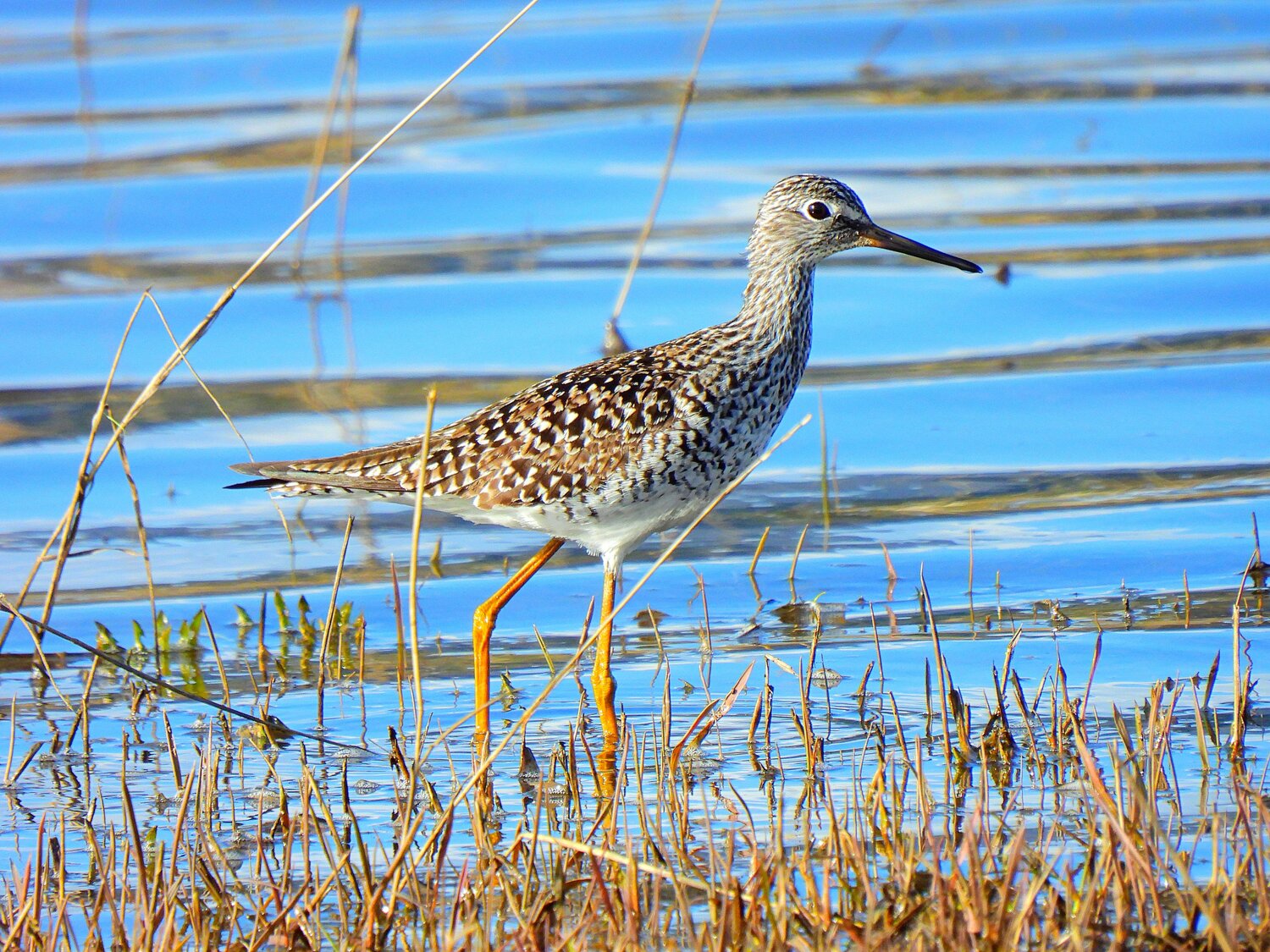
Photo courtesy Charles Martinez
This week’s Bird of the Week, compliments of the Weminuche Audubon Society and Audubon Rockies, is the greater yellowlegs.
This trim, elegant, wading bird is a member of the sandpiper family, whose migratory path may place it in our area in spring or fall. It is a bird typically associated with marshes, mudflats, shallow ponds and shorelines, although it may also be found in wet meadows and flooded agricultural fields. They are medium- to long-distance migrants that winter in areas from southern California to Mexico, Central America and throughout South America.
This long-legged shorebird often wades in deeper water than other sandpipers. It usually forages alone, moving with rapid, jerky movements and a bobbing head. The tip of its long bill is very sensitive to touch, allowing it to feel for food concealed in the mud or sand. Aquatic invertebrates are its main food source, but it will also consume snails, worms, frogs and some seeds and berries. It will run with neck extended to grab a small fish that comes into view. During the day it will stab at the water’s surface for food, but during low light and at night, it feeds by sweeping its bill with tips submerged in the water.
The greater yellowlegs is a very vocal bird that is difficult to get close to. Its strident alarm calls, which may spook all the shorebirds in the area, have given it the common names of telltale, tattler and yelper.
Nesting takes place during summer in remote, boggy, buggy swamps in Canada and Alaska. This inhospitable environment has caused the greater yellowlegs to be one of the least studied shorebirds. Less than 40 days after hatching, chicks are independent and the parents have left. After all the adults have left to migrate, juveniles join in small flocks and depart southward together.
Long, bright yellow legs make this bird stand out in a group of shorebirds. It is long-necked with a bill that is thick-based, slightly upturned and at least 1.5 times as long as the head. The similarly patterned lesser yellowlegs is shorter and has a shorter bill, but unless they are seen together, size differences between the two are hard to judge.
For information on events, visit www.weminucheaudubon.org and www.facebook.com/weminucheaudubon/.
Photo courtesy Charles Martinez


 >